
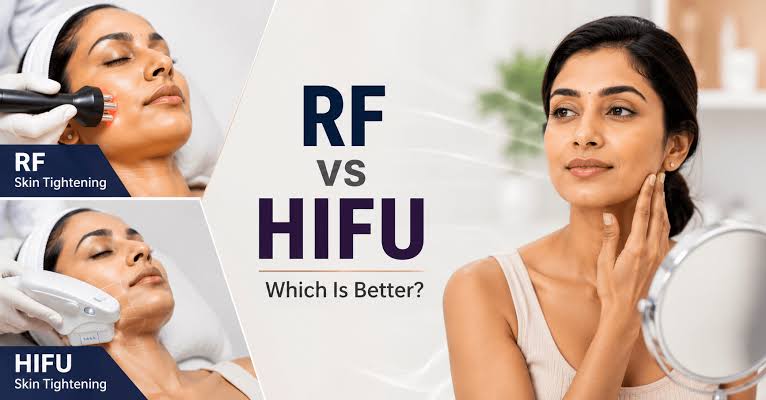
HIFU uses focused ultrasound to heat deeper tissue and is often used for the jawline, neck and brow, while radiofrequency (RF) heats the dermis and suits skin quality and mild laxity. Both stimulate collagen gradually, and neither equals surgery. Which suits you depends on your skin, the area and your goals, so a dermatologist should assess you before you choose.
Who this guide is for
This guide is for adults in Noida, Ghaziabad and the wider NCR who are comparing non-surgical skin tightening options and want to understand how HIFU and RF differ in benefits, risks and recovery. It is general education, not a diagnosis.
How each treatment works
HIFU (high-intensity focused ultrasound)
HIFU delivers focused ultrasound energy to specific depths beneath the skin, creating small points of heat that prompt the body to remodel collagen and tighten tissue over time. Because it reaches deeper layers, it is commonly discussed for lifting and firming along the jawline, neck and brow, and for mild to moderate laxity.
Radiofrequency (RF)
RF uses electrical energy to heat the dermis, which stimulates collagen and can tighten skin gradually. There are several types of RF device. Some treat the surface and upper layers broadly, and others, such as fractional RF or RF microneedling, deliver energy through tiny needles for texture, scars and laxity. RF is commonly used for mild laxity, fine lines and skin quality.
HIFU vs RF at a glance
| Factor | HIFU | RF |
|---|---|---|
| Energy used | Focused ultrasound | Radiofrequency (electrical) energy |
| Typical target | Deeper support layers | Dermis and upper layers |
| Common areas | Jawline, neck, brow, lower face | Face, neck, body areas, texture and scars (device dependent) |
| Best suited to | Mild to moderate laxity | Mild laxity, fine lines, skin quality |
| Sensation | Heat, tingling or sharp discomfort in spots | Warmth, sometimes stinging with needle-based types |
| Sessions | Often a single session with later review | Often a short course, depending on the device |
| Time to results | Gradual, over weeks to months | Gradual, over weeks to months |
| Typical downtime | Usually minimal, with temporary redness or tenderness | Minimal to several days, depending on the device |
This is a general guide. Devices and protocols differ, and your dermatologist will advise what applies to you.
Benefits and who may benefit
Both treatments are non-surgical and aim to firm skin and support its structure without cutting. They suit people with early signs of laxity, softer contours or reduced firmness who want gradual improvement without major downtime. Many dermatologists combine them with good sun protection and skincare for the best long-term result.
Who may not be suitable
These treatments may disappoint if you have significant sagging, heavy skin folds or expectations close to a surgical lift. In that case, a surgical opinion is more honest advice. Suitability also depends on your anatomy, skin tone, medical history and any previous fillers, threads or implants.
Risks and side effects
Common, usually temporary effects of either treatment include redness, warmth, swelling and tenderness. Less common effects can include bruising, numbness or nerve-related sensations, blistering, burns or pigment change, particularly if settings are too aggressive for the skin type. Indian skin types (roughly III to V) often need conservative parameters because irritation can lead to post-inflammatory pigmentation.
Some RF devices may not suit people with pacemakers or certain metal implants. Active infection or inflammation in the area, pregnancy, keloid tendency, bleeding or autoimmune conditions and some medicines can also change suitability for either treatment. Share your full history and everything you take or apply.
Sessions, recovery and aftercare
The number of sessions depends on the device, the area and your response. HIFU is often done as a single session with a review later, while RF is frequently a short course. Recovery ranges from almost none to several days of redness or swelling.
After treatment, follow your dermatologist’s instructions, protect your skin from strong sun, introduce products gradually and avoid picking or scratching. Contact the clinic if you notice worsening pain, blistering, pus, numbness that does not settle or unexpected swelling.
What results and downtime are realistic?
Results build gradually over weeks to months as collagen responds, and they vary from person to person. Expect refinement and mild lifting, not the outcome of surgery. Stronger settings do not guarantee proportionally better results, and no clinic can honestly promise identical or instant outcomes. Standardised photographs in consistent light are more reliable than checking the mirror every day.
Which treatment suits fine lines and mild laxity?
Fine lines on the surface often respond to sunscreen, retinoids, peels or resurfacing, and RF may help skin quality and texture. Mild laxity, especially along the jawline or brow, may suit HIFU or RF. Some people benefit from a staged combination. Because devices differ, ask which specific device and protocol your clinic uses and why.
Alternatives to consider
Depending on your concern, other options include resurfacing lasers or peels for texture and tone, fillers for lost volume, botulinum toxin for certain lines, thread lifts for modest lift, and surgery for significant sagging. A dermatologist can explain which concern each one actually addresses.
What affects the cost?
Cost depends on the device and technology, the area treated, the treatment intensity, the number of sessions, practitioner expertise, consumables such as cartridges or tips, and follow-up. Ask for a written estimate that separates necessary treatment from optional extras, and be cautious of very low prices, which may reflect lower-quality consumables or fewer sessions.
Your next step: a consultation
The most useful first step is an assessment, not a device choice. At Reviva Skin & Hair Clinic, the dermatologist examines your skin, explains whether HIFU, RF or another option suits you, and gives a clear written plan before you decide. Consultations are available in Sector 76, Noida and Raj Nagar Extension, Ghaziabad. Bring your current products, medicines and questions.
Book a skin tightening consultation
Frequently asked questions
Which treatment suits fine lines and mild laxity?
Fine lines often respond to sunscreen, retinoids, peels or resurfacing, and RF can help skin quality. Mild laxity may suit HIFU or RF, depending on the area and your skin.
How do HIFU and RF differ?
HIFU delivers focused ultrasound to deeper tissue, while RF heats the dermis with electrical energy. Both stimulate collagen gradually, but they differ in depth, sensation, sessions and suitability.
What results and downtime are realistic?
Expect gradual, subtle to moderate improvement over weeks to months, not surgical results. Downtime ranges from minimal to several days of redness or swelling, depending on the treatment.
Is HIFU or RF better?
Neither is universally better. The right choice depends on your concern, skin type, the area and the specific device, and some people benefit from a combination.
Can I combine HIFU and RF?
Sometimes, but timing and order matter, and doing everything at once is rarely necessary. Your dermatologist can advise whether to stage treatments.
Where can I consult in Noida or Ghaziabad?
Reviva Skin & Hair Clinic has a clinic in Sector 76, Noida and another at Raj Nagar Extension, Ghaziabad. Please book ahead to choose a convenient time.
Clinic locations
Noida: S No. 14 GF, Street 76 Market, Amrapali Silicon City, Gate No. 4, Sector 76, Noida.
Ghaziabad: Shop S-1, Ground Floor, Quantum Homes, Raj Nagar Extension, Ghaziabad, Uttar Pradesh 201017
For independent patient education, see the American Academy of Dermatology patient resources.